
 English
 русский
 Español
A barbell moves in a straight line. A dumbbell pulls straight down. A heavy fitness ball does neither. It shifts. It rolls. It demands that the body stabilize against a load that refuses to stay put. A strength training heavy fitness ball turns a simple press or slam into a full-body coordination challenge. Gyms stack them against the wall. Trainers program them for athletes who have outgrown fixed-path machines. The ball is soft enough to catch and dense enough to punish bad form.
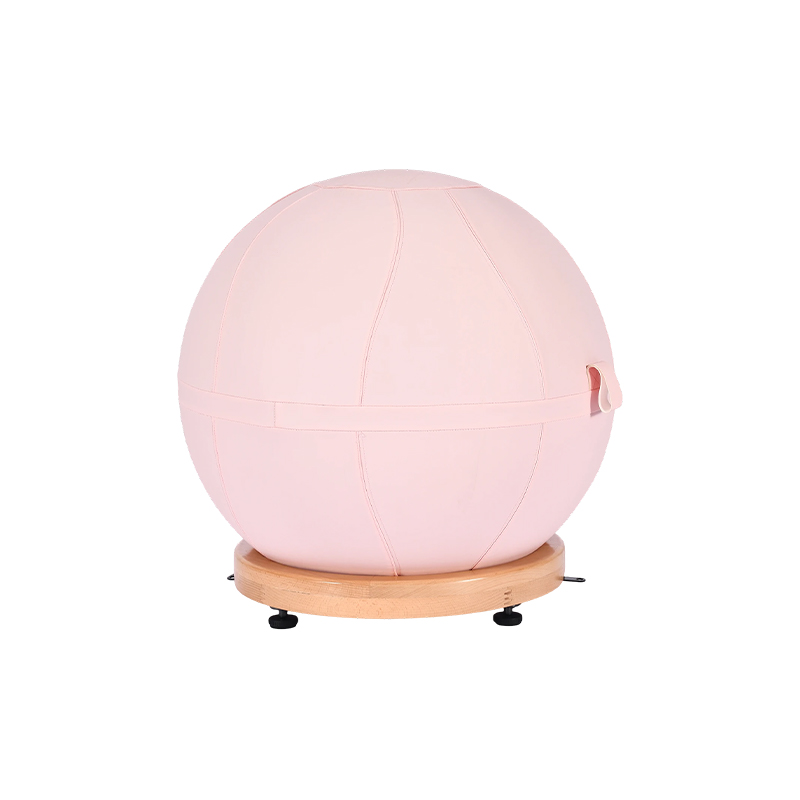
What the Ball Is Actually Made Of
The outer skin takes the abuse. Most heavy fitness balls use a rubber or synthetic leather shell stitched over a thick-walled inner bladder. A strength training heavy fitness ball with a double-stitched or heat-sealed shell survives repeated slams onto rubber flooring and occasional contact with rougher surfaces. Single-stitched seams split. A split seam spills the fill material across the gym floor and ends the workout.
The fill material determines the ball's character. Sand-fill balls are dense and dead. They drop and stay dropped. Iron sand or steel shot fill increases the weight without increasing the diameter, so a 20-kilo ball is still catchable. A strength training heavy fitness ball with a properly packed fill keeps its shape under impact and does not shift its center of mass when thrown.
Diameter matters for grip. A ball that is too wide for the user's hands becomes a finger-strength test instead of a training tool. A strength training heavy fitness ball sized so the hands can span roughly two-thirds of the circumference lets the athlete control the ball through slams, rotational throws, and overhead catches. Some models come in graduated diameters as the weight increases. Some maintain a consistent diameter and change only the fill density. Athletes who train with heavy balls across multiple weights tend to prefer consistent diameter.
Movements That Find the Weak Points
Wall balls punish a ball that is not superbly round. A lopsided fill or a shifted internal bladder changes the bounce angle. The athlete throws against a target ten feet up, catches the rebound, and drops into a squat. A strength training heavy fitness ball that rebounds true saves the athlete from chasing errant bounces and losing rhythm mid-set.
Slams put the shell and the fill under impact loads that no other exercise replicates. The ball accelerates from overhead to the floor. The shell stretches on impact. The fill compresses and rebounds slightly. A strength training heavy fitness ball built for slams has a shell with enough elasticity to survive hundreds of these cycles without tearing at the seams. A ball designed only for presses and carries may rupture under repeated slam impact.
Rotational throws against a wall or to a partner test the grip surface. A ball that is too slick slips out of the hands at the release point. A ball that is too tacky grabs and throws off the release timing. A strength training heavy fitness ball with a textured but non-abrasive surface lets the athlete control the release point without tearing up their palms during high-repetition sets.
Carries and loaded carries use the ball as an awkward load. The athlete hugs the ball against the chest or cradles it in the crook of an arm while walking, lunging, or climbing. A strength training heavy fitness ball that conforms slightly to the body stays secure without crushing the ribs. A ball that is too rigid creates pressure points that limit how long the athlete can hold the position.
Here is what a heavy fitness ball needs to handle real training:
- Double-stitched or heat-sealed shell that survives repeated floor impact
- Consistent fill that maintains shape and center of mass throw after throw
- Diameter that fits the user's grip span for secure overhead control
- Surface texture that balances grip and release without abrading skin
Where the Ball Fits in a Training Program
Strength and conditioning gyms use heavy balls for power development. The slam series. The rotational toss. The overhead throw. These are explosive movements that build rate of force development in ways slow lifts cannot. A strength training heavy fitness ball that holds its shape through dozens of sessions becomes a staple tool. One that deforms or splits gets pulled from the rotation and replaced with a different brand.
Rehabilitation settings use lighter versions of the same ball for controlled dynamic movements. The unstable load forces the smaller stabilizer muscles to engage around a joint that is recovering from injury. A strength training heavy fitness ball with a predictable weight and consistent shape lets the therapist program progressive overload safely.
Group fitness classes cycle through ball stations for conditioning blocks. The ball gets picked up, slammed, thrown, and dropped dozens of times per class by users who range from careful to aggressive. A strength training heavy fitness ball in this environment needs durability that borders on commercial-grade. The seams, the fill stability, and the surface wear all get tested daily.
What Gives Out First on a Cheap Ball
The seams go first. Then the fill shifts. Then the ball becomes an uneven lump that athletes avoid. A strength training heavy fitness ball with properly reinforced seams and a fill that is compacted evenly during manufacturing avoids this trajectory. The price difference between a ball that lasts and a ball that does not is small compared to the cost of replacing the cheap one twice.
The valve on inflatable designs is the other failure point. A ball that slowly leaks air between sessions changes weight and bounce characteristics without the athlete noticing until performance degrades. A strength training heavy fitness ball that uses a non-inflatable design filled entirely with dense material removes the valve as a failure point.
A heavy fitness ball sits in the corner of the gym until someone picks it up and throws it at the floor as hard as they can. That is what it is designed for. The shell, the fill, the seams, and the grip surface all have to handle that reality without complaint. Choose a strength training heavy fitness ball built for impact, balanced for control, and sized for the hands that will be catching it. The training effect comes from the load. The durability comes from the build.