
 English
 русский
 Español
A Pilates reformer looks like a bed on rails. A sliding carriage rolls back and forth. Springs provide resistance. Straps and pulleys pull on arms and legs. The user lies, sits, kneels, or stands on the carriage, pushing and pulling against the springs in controlled movements. A multifunctional Pilates reformer machine adds attachments that turn the reformer into a complete strength and flexibility station. A tower with push-through bar. A jump board for plyometric work. A Cadillac frame for hanging exercises. For home users, boutique studios, and physical therapy clinics, one machine replaces multiple pieces of equipment.
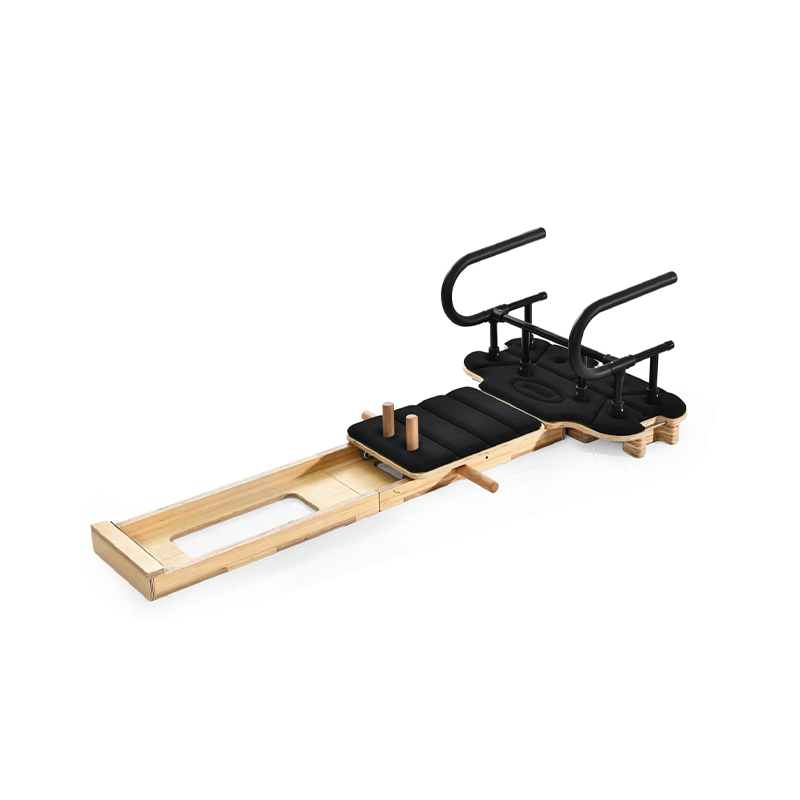
The Carriage That Glides on Rails
The carriage is the moving platform. It rolls on wheels or bearings along aluminum or steel rails mounted to a rectangular frame. The user's body weight provides the load. Springs attached to the carriage provide the resistance. A multifunctional Pilates reformer machine uses springs of different tensions, typically color-coded, so the user can adjust resistance by swapping or combining springs.
The carriage rides on sealed bearings or precision wheels that keep motion smooth and quiet. A carriage that sticks or chatters distracts from the exercise and wears unevenly. A multifunctional Pilates reformer machine with a properly aligned carriage rolls silently through hundreds of repetitions per session.
The carriage pad is dense foam covered in vinyl or leatherette. It supports the spine during supine exercises and cushions the knees during kneeling work. A multifunctional Pilates reformer machine with a firm, non-slip pad keeps the user stable while the carriage moves beneath them.
The Springs and Straps That Provide the Load
Springs are the soul of the reformer. They provide progressive resistance that increases as the spring stretches. A multifunctional Pilates reformer machine typically uses four to six springs of varying resistance levels. Heavy springs for leg work. Medium springs for arm series. Light springs for rehabilitation and flexibility training.
The springs attach to a gear bar that adjusts position. Moving the gear bar changes the spring tension and the range of motion. A multifunctional Pilates reformer machine with a quick-adjust gear bar lets the user change settings between exercises without leaving the carriage.
The straps and pulleys redirect the spring force to the user's hands and feet. Adjustable rope lengths let different body sizes use the same machine. Leather or padded handles provide grip. A multifunctional Pilates reformer machine with smooth-running pulleys and easily adjustable straps transitions between exercises in seconds.
The Tower, the Jump Board, and Everything Attached
A standard reformer works the body in horizontal and seated positions. A multifunctional reformer adds a vertical tower at one end. The tower includes a push-through bar for overhead pressing, spring-loaded arm springs for upper body work, and a roll-down bar for spinal articulation. The tower turns the reformer into a half-Cadillac.
A jump board attaches to the foot end. The user lies on the carriage with feet against the board and pushes off against spring resistance. The carriage rebounds. The user lands softly. A multifunctional Pilates reformer machine with a jump board adds plyometric training to the Pilates repertoire.
A standing platform and a sitting box expand the exercise options further. The box sits on the carriage for seated and prone exercises. The platform mounts at one end for standing work. A multifunctional Pilates reformer machine configured with these attachments covers the full Pilates method in one footprint.
Here is what a multifunctional reformer needs to deliver:
- Smooth-rolling carriage on sealed bearings with padded, non-slip surface
- Color-coded springs of varying resistance with quick-adjust gear bar
- Adjustable straps and pulleys with comfortable padded handles
- Tower attachment with push-through bar and arm springs
- Compatible jump board, sitting box, and standing platform
Where the Multifunctional Reformer Fits
Home users with dedicated workout space replace a roomful of equipment with one machine. A multifunctional Pilates reformer machine provides strength training, flexibility work, and cardio options without switching machines.
Boutique Pilates studios run group reformer classes. The multifunctional design lets each station offer the full exercise library. A multifunctional Pilates reformer machine that adjusts quickly between users keeps class flow uninterrupted.
Physical therapy and rehabilitation clinics use reformers for controlled resistance training. The spring resistance is measurable and repeatable. A therapist can progress a patient from one light spring to heavier resistance without changing equipment.
What Breaks When the Reformer Is Underspec
The carriage wheels wear flat spots from uneven rails or poor bearing quality. A multifunctional Pilates reformer machine with precision-machined rails and sealed bearings rolls smoothly through years of use. The springs lose tension or develop gaps between coils. Quality springs made from music wire or stainless steel maintain calibration. Cheap springs sag and change the resistance.
The straps fray at the pulley contact points. A multifunctional Pilates reformer machine with reinforced webbing and smooth pulleys prevents wear. The frame welds crack at the stress points. A properly welded aluminum or steel frame with gusseted corners stays rigid.
A multifunctional Pilates reformer machine is a bed, a weight stack, and a cable machine in one. The carriage slides. The springs pull. Choose a manufacturer that builds the frame rigid, selects springs that keep their tension, and designs the attachments for quick changes between exercises. The workout flows and the machine stays quiet. That is what it is for.