
 English
 русский
 Español
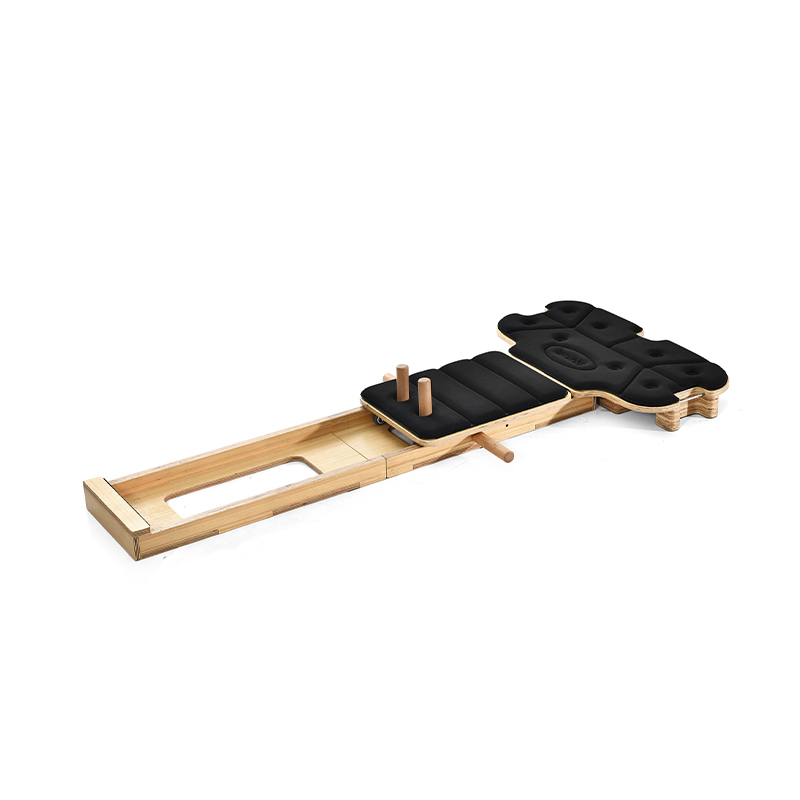
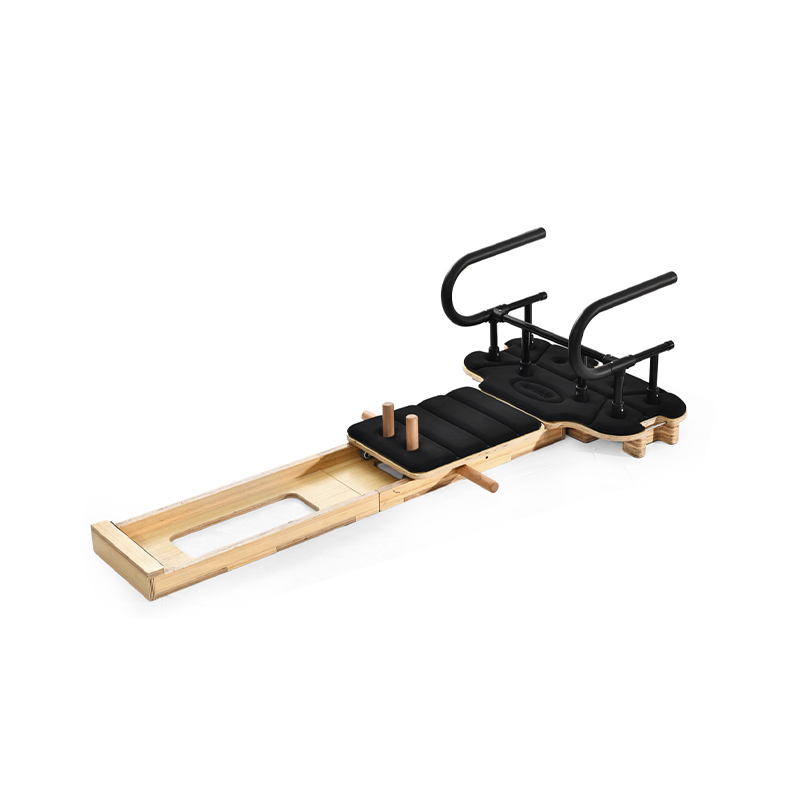
A multifunctional Pilates reformer machine lives under constant tension. Springs stretch. Ropes slide through pulleys. A carriage rolls on rails. Add a tower, jump board, and sitting box, and you have even more contact points that wear. Many factory defects aren't visible in a product photo. They reveal themselves after a few hundred hours of use.
The Carriage, Rails, and Springs
The carriage rides on wheels or bearings along aluminium rails. Sealed ball bearings roll smoothly and stay quiet. Nylon wheels are cheaper, but they develop flat spots if the carriage sits loaded in one position. A flat-spotted wheel rumbles, and the client feels it through their spine during a slow movement.
Run your finger along the inside of the rail. It should feel slippery-smooth. A rough rail grinds the wheels down. Grab the carriage edges and try to tilt it. Any side-to-side play means the wheel spacing is off. That play amplifies under load.
Springs are the heart of the reformer. They should be colour-coded and marked with their weight rating. Cheap springs lose tension unevenly. After a few months, the heavy spring offers no more resistance than the light one, and the client works one side harder without knowing it. Spring hooks must be closed, not open. An open hook can slip off under tension. Ask the factory for a cycle life rating. A good spring runs thousands of cycles before its force drops more than ten percent. No number means no testing.
Ropes, Pulleys, and the Multifunctional Attachments
Reformer ropes are usually nylon with a braided sheath. The sheath wears where it rubs the pulley groove. Once it frays and the core shows, the rope is a snap risk. Pulley design determines rope life. The groove should be wide enough to seat the rope without pinching. The pulley must spin on a sealed bearing. A sticky pulley drags the rope, and the user pulls harder, stressing everything.
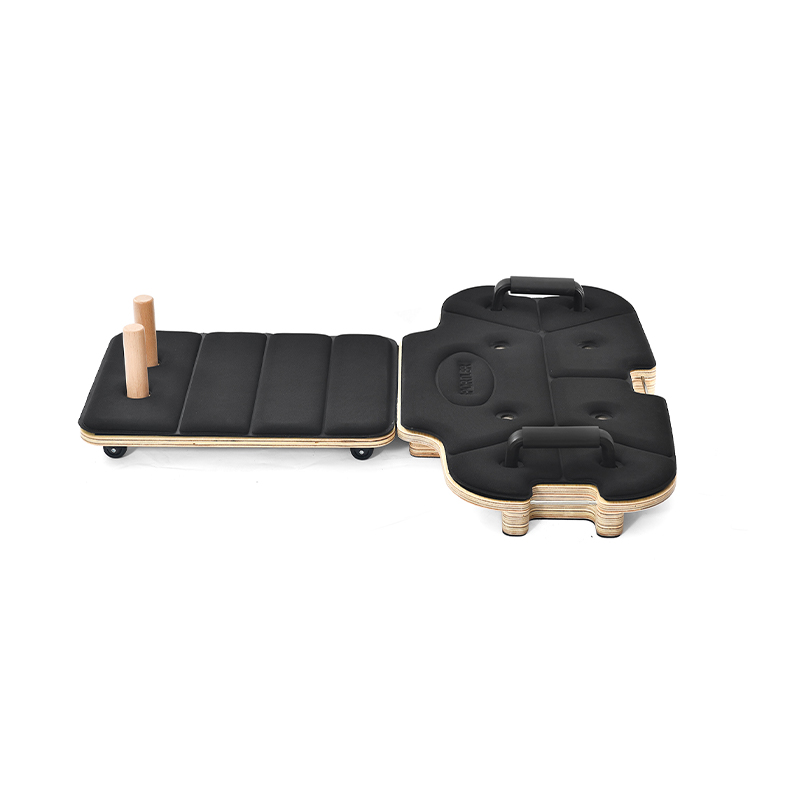
The attachments multiply the wear points. A tower adds push-through bars and spring hooks. A jump board takes impact. A sitting box changes the platform. Each attachment has a locking mechanism. It should be a positive lock—a pin, a clamp, a spring-loaded detent. Not friction alone. Friction works when new and stops working when surfaces wear smooth. On a sample, attach and remove the tower, jump board, and box ten times each. The locks should stay positive. A tower that wobbles or a jump board that shifts during use is a tolerance problem that will only get worse.
The Frame and the Upholstery
The frame is usually steel or aluminium. Steel frames are welded. Look at the weld beads. Smooth and continuous means proper penetration. Lumpy or undercut welds are stress concentrators, and a reformer sees cyclic loading every session. Aluminium frames are bolted. Bolts need thread-locking compound and periodic inspection. A machine that arrives with loose frame bolts will only loosen further.
Upholstery takes sweat, friction, and cleaning chemicals. High-density closed-cell foam and marine-grade vinyl hold up in a commercial studio. Cheap foam compresses into a pancake. Thin PVC cracks. Pull the cover tight on a sample. No wrinkles, no loose corners. Wipe it with cleaning solution and check for peeling. A cover that slides under a client during a plank is not a comfort issue. It's a safety issue.
Sample Testing That Tells the Truth
Lie on the carriage and move through a full range. Listen. Squeaks and bumps are early warnings. Load all springs and release them one by one. The carriage should return smoothly, no hesitation. Pull the ropes from every angle and check for fraying at the pulleys. Tighten and loosen every adjustment knob multiple times. Stripped threads reveal themselves fast. Do all of this again after a week of heavy use if you can. The defects that hide on day one show up on day seven.
A multifunctional Pilates reformer machine factory that has done its job produces a machine that feels solid, moves silently, and doesn't need constant adjustment. One that hasn't produces something that photographs well but feels like a wobbly cart under load. The difference is in the springs, the bearings, the welds, and the locks. The things you can't photoshop.