
 English
 русский
 Español

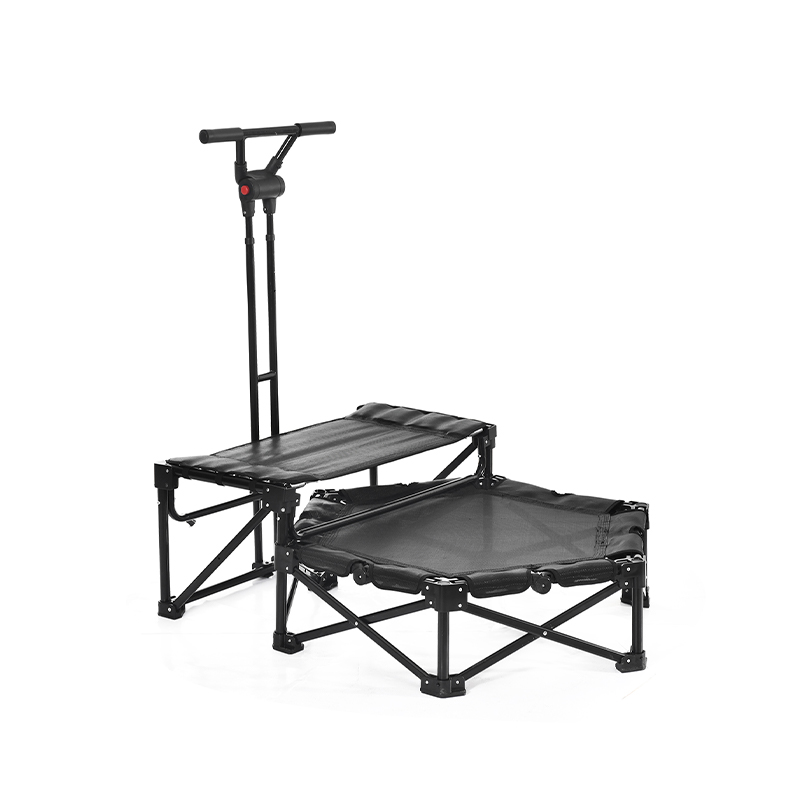
An up-down foldable fitness trampoline folds on two axes: the frame folds in half across the diameter, and the legs fold up under the deck. The result is a package that slides under a bed or stands in a closet, instead of the round disc that takes up the corner of the room. The bouncing surface is the same as any rebounder, but the folding geometry is what decides whether the trampoline gets used or gets stored.
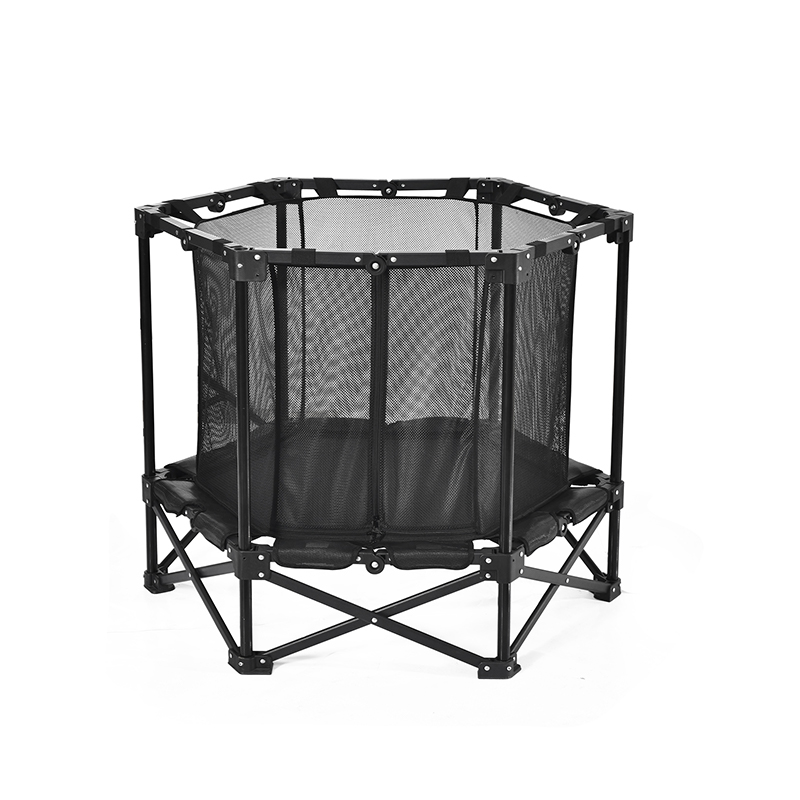
The Double Fold Is a Structural Problem
A frame that folds in half has a hinge at the diameter and a pin that locks it open. That hinge carries the full bouncing load, and it has to lock positively or the trampoline folds mid-jump. A single-fold frame only has to fold the legs. The double-fold frame has to keep the circle rigid through two hinges.
A well-built double-fold frame uses a steel hinge with a locking pin and a secondary safety clip. The cheaper version uses a friction hinge that loosens after a few months, and the frame starts to sag at the diameter.
The Legs Fold Under, Not Out
The up-down name refers to the legs folding up against the deck rather than folding out to the side. That keeps the folded package narrow enough to slide under furniture.
The leg joints take the bouncing load through the whole session, and the locking mechanism has to hold. A leg that folds during use is a fall. The factory that tests the leg lock through thousands of cycles ships a trampoline that stays open.
The Bounce Surface and the Springs
The mat and the springs are the same as a standard rebounder. The mat is the polypropylene or the nylon mesh, and the springs or the bungee cords provide the rebound. The folding frame adds a seam at the diameter, so the mat has to be attached in a way that does not pull at that seam.
A bungee-suspended mat is easier to fit to a folding frame than a spring-suspended one, because the bungee tension can be adjusted at the assembly. The spring version needs the mat sewn to the exact dimension so the fold line does not pucker.
Weight Capacity and Frame Stiffness
The folding frame is less stiff than the welded circle, so the weight capacity and the frame gauge have to compensate. A folding trampoline rated for 120 kilos uses a thicker frame tube than a welded one of the same rating.
What the factory has to deliver:
- Steel hinge at the diameter with a positive lock and a safety clip
- Leg locks that hold through the full session
- Mat attached without puckering at the fold seam
- Frame gauge sized for the weight capacity
- Folded package that slides under a bed
- Non-slip feet that protect the floor
The Apartment and the Small Home
The apartment user unfolds the trampoline in the living room and folds it away after the session. The small home uses it in the spare room and stores it in the closet. The folded package is the feature that makes the purchase possible.
The Two Ways It Fails
The hinge loosens and the frame sags at the diameter. The leg lock releases mid-bounce. Both are safety failures, not cosmetic ones, and both trace back to the hinge and the lock design rather than the mat or the springs.